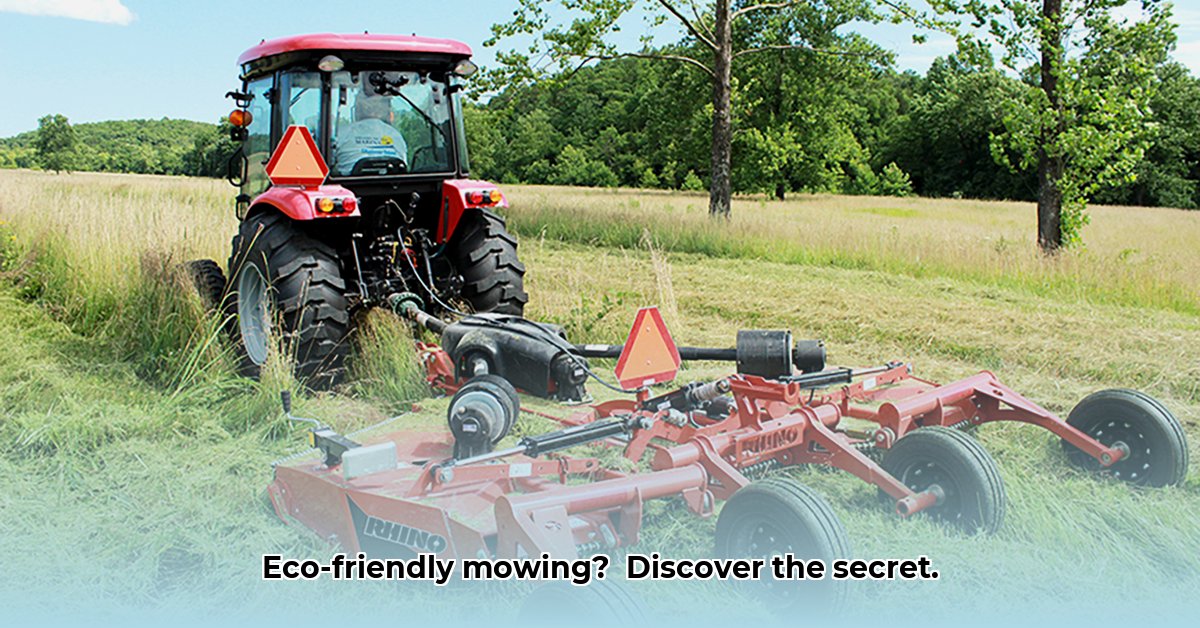
Sustainable farming demands smart choices, and land management is key. Choosing the right equipment, like a brush mower from Tractor Supply, can significantly impact your farm's environmental footprint and overall productivity. This guide explores how to select, maintain, and utilize Tractor Supply brush mowers for eco-friendly mowing practices. For more information on small tractor brush hog options, check out this helpful resource: small tractor brush hog.
Choosing the Right Tractor Supply Brush Mower: Assessing Your Needs
Before selecting a brush mower, thoroughly assess your farm's specific needs. Consider these critical factors:
Farm size and terrain: A small, lightweight model suffices for smaller, flat areas, while larger farms with hilly or uneven terrain require more powerful machines. Don't underestimate the impact of terrain; a mower suitable for flat land might struggle on slopes.
Vegetation type and density: Thick brush necessitates a heavy-duty brush hog (rotary mower), whereas lighter vegetation may only need a rotary cutter or flail mower. Different mowers excel in different conditions; understanding your vegetation is crucial for mower selection.
Budget: Tractor Supply offers a range of price points. While a higher initial investment might seem daunting, a durable mower saves money on repairs and boasts a longer lifespan. Balancing cost and longevity is key; consider the total cost of ownership over several years.
Fuel efficiency: Consider the fuel consumption of different models, especially if you have a large area to mow. Higher fuel efficiency minimizes operating costs and reduces your farm's carbon footprint.
A well-considered purchase saves time, money, and resources in the long run. Don't rush!
Tractor Supply's Brush Mower Lineup: A Comparative Overview
Tractor Supply offers various brush mower types, each with unique strengths:
Rotary Cutters: Versatile and suitable for various vegetation types and terrains. They're often the most affordable option, making them ideal for smaller farms or homeowners tackling yard work. Easy to operate, they're a good starting point for those new to brush mowing.
Flail Mowers: Best for dense brush and uneven terrain. Their chopping action effectively shreds vegetation, making them ideal for pasture maintenance and clearing rough patches. They are slightly more complex to operate and maintain than rotary cutters.
Brush Hogs (Rotary Mowers): The heavy-duty choice for clearing heavily overgrown areas and thick brush. These are powerful but demand more maintenance and operator expertise. They represent a greater initial investment, but their power and resilience justify the cost for demanding applications.
The choice depends on your specific needs and budget. Careful consideration ensures the best match for your farm.
Maintaining Your Tractor Supply Brush Mower: Essential Practices
Regular maintenance is vital for maximizing your mower's lifespan and ensuring optimal performance. Neglecting maintenance leads to decreased efficiency and costly repairs. Here's a simplified checklist:
Blade Sharpening/Replacement: Dull blades reduce efficiency, increase engine strain, and produce uneven cuts. Sharpen or replace blades regularly. A sharp blade makes a noticeable difference in both cutting quality and mower performance.
Engine Oil Changes: Consistent oil changes are critical for preventing engine damage. Follow the manufacturer's recommended oil type and change intervals. Fresh oil keeps the engine running smoothly and prevents premature wear.
Regular Cleaning: After each use, remove grass clippings and debris. This prevents build-up that can hinder airflow and engine performance. A clean machine operates more efficiently and runs for longer.
Proper Storage: Store your mower in a dry, secure location during off-season. Follow the manufacturer's instructions regarding fluid drainage if necessary for seasonal storage (especially in areas with freezing temperatures).
Integrating Brush Mowers into Sustainable Farming: Best Practices
Brush mowers play an important role in sustainable agriculture. Proper use maximizes their positive impact while minimizing negative consequences:
Pasture Management: Regular mowing prevents overgrazing, promoting healthier pastures and reducing soil erosion. Sustainably managed pastures improve overall farm health.
Weed Control: Mowing suppresses weed growth, potentially reducing the need for herbicides, which are detrimental to the environment and soil health. Reduced herbicide use is a key component of eco-friendly farming.
Fire Prevention: Mowing creates firebreaks which reduces the risk of wildfires, especially in dry climates. This enhances farm safety and protects the surrounding environment.
Soil Conservation: Choosing the correct mower and utilizing appropriate mowing techniques minimizes soil compaction and erosion. Minimizing soil disturbance safeguards the long-term health and productivity of your land.
Dr. Emily Carter, Professor of Agronomy at the University of California, Davis, emphasizes the importance of holistic approaches, stating, "Sustainable agriculture is about integrating practices that benefit both the environment and the farmer's bottom line. Brush mowing, when implemented responsibly, can be a valuable part of that strategy.”
Actionable Steps for Sustainable Mowing
Assess your needs: Determine your farm's size, terrain, vegetation, and budget. (Estimated completion time: 30 minutes)
Choose the right mower: Select a model that aligns with your needs and budget from Tractor Supply's range. (Estimated completion time: 1 hour)
Implement proper mowing techniques: Mow strategically, maintain proper mowing height, and avoid over-mowing. (Ongoing practice)
Maintain your mower: Regularly inspect blades, change engine oil, clean the mower, and store it properly. (Ongoing practice)
By following these steps, you can improve your farm's sustainability while increasing efficiency and productivity. Remember, responsible land management is vital for long-term success.